Overview
Operating heavy machinery (tractors, loaders, excavators, bulldozers) is a skilled profession that combines technical knowledge, safety discipline, and hands‑on experience. In Moscow, demand for qualified operators spans construction, utilities, landscaping, municipal works and logistics. Proper training and licensing not only ensure legal compliance and safety, they also accelerate career growth and earning potential.
Types of equipment and specializations
— Tractors (agricultural and industrial)
— Wheel and tracked loaders
— Hydraulic excavators (backhoe, long‑reach)
— Bulldozers / crawler tractors
— Auxiliary roles: dump trucks, skid‑steer loaders, compactors, graders
Specialization matters: each machine requires specific handling skills, safety knowledge and often distinct certification.
How licensing and certification work (Russia / Moscow)
— Operators must complete training at an accredited training center and pass theoretical and practical exams to receive a qualification certificate (e.g., удостоверение машиниста/тракториста‑машиниста or a specific operator’s certificate).
— Training covers machine operation, maintenance basics, and occupational health & safety (охрана труда, техника безопасности).
— A medical fitness certificate (медицинская справка) confirming fitness to operate heavy machinery is typically required before practical training and employment.
— Requirements and document names can vary by machine and employer; confirm specifics with the training center and prospective employer.
— Periodic retraining or advanced courses are common—ask about refresher intervals and continuing education.
Typical training program structure
— Theory (classroom): machine principles, controls, hydraulics basics, load/stability theory, regulations, signaling and workplace rules.
— Safety & first aid: PPE, emergency procedures, hazard recognition, trench safety, electrical awareness.
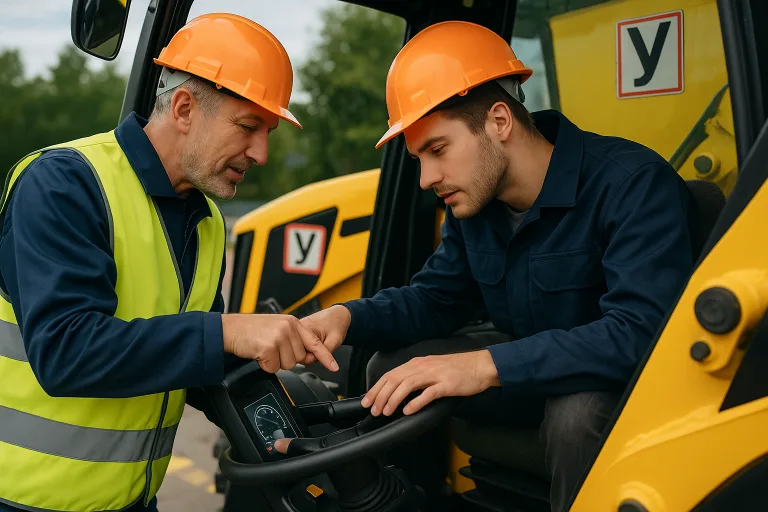
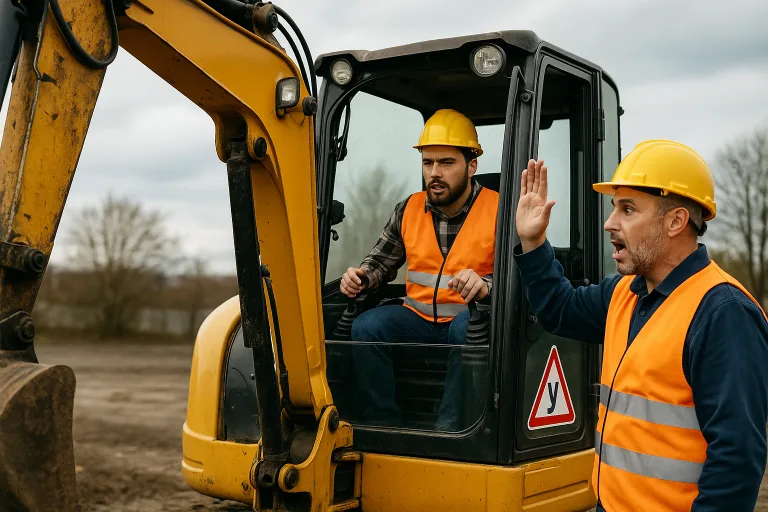
— Practical training: supervised hours on real machines; progressive exercises (basic maneuvers → complex tasks).
— Simulators: modern centers often use simulators to accelerate skill acquisition and reduce risk.
— Assessment: written and practical exams; successful candidates receive certification and a training record.
Medical, legal and administrative checklist
— Age: most employers require you be 18+.
— Passport/ID and copies.
— Medical certificate confirming fitness for heavy machinery operation.
— If required by employer: local registration, labor contract or proof of training completion.
— Keep records of training, certificates, and periodic medical checks.
Choosing a training center in Moscow
Look for:
— Accreditation and recognizable certificates.
— Modern equipment and simulator availability.
— Experienced instructors with real field experience.
— Transparent course content, schedules, and pricing.
— Job placement or employer partnership programs.
— Positive reviews and references from local construction/municipal employers.
Questions to ask:
— How many practical hours on real machines are included?
— Are instructors certified and employed in the field?
— Is there assistance with exams, medical checks, or job placement?
— What are total costs and refund policies?
Safety essentials every operator must master
— Pre‑shift machine inspection and daily checklists.
— Proper mounting/dismounting and seatbelt/ROPS use.
— Load limits, center of gravity, and stability rules.
— Safe digging and trench practices (cave‑in prevention).
— Signaling, communication with banksmen and site teams.
— Working near overhead lines and buried utilities.
— Fire prevention, spill control and environmental compliance.
— First aid, emergency shutdown and evacuation procedures.
Career development and progression
— Entry level: operator’s assistant → certified machine operator.
— Mid level: multi‑machine operator, night/shift specialist.
— Senior: foreman, site supervisor, fleet coordinator.