Introduction
Operating heavy machinery in Moscow — from tractors and loaders to excavators and bulldozers — is a skilled, well‑paid and in‑demand profession. To work legally and safely on construction sites, municipal projects or in agriculture, an operator needs proper vocational training, medical fitness, safety knowledge and validated certification. This article outlines the practical steps, safety priorities and career paths for aspiring and experienced operators in Moscow, with tips for choosing training providers and advancing your career.
Who needs training and why
— Employers and regulators require operators to have professional training and documented competency to reduce accidents and equipment damage.
— Trained operators are more employable, command higher wages, and can move into specialized roles (e.g., site foreman, trainer, fleet supervisor).
— Training covers machine operation, routine maintenance, on‑site safety, transport rules, and emergency procedures.
Typical path to qualification in Moscow
1. Choose your specialization: tractor, wheel/track loader, excavator, bulldozer (or multiple machines).
2. Undergo a preliminary medical examination to confirm fitness for the job (vision, hearing, cardiovascular, drugs/alcohol screening where required). Age and health standards vary by employer and equipment.
3. Enroll in an accredited vocational training center or college offering courses for heavy equipment operators. Verify accreditation and program recognition.
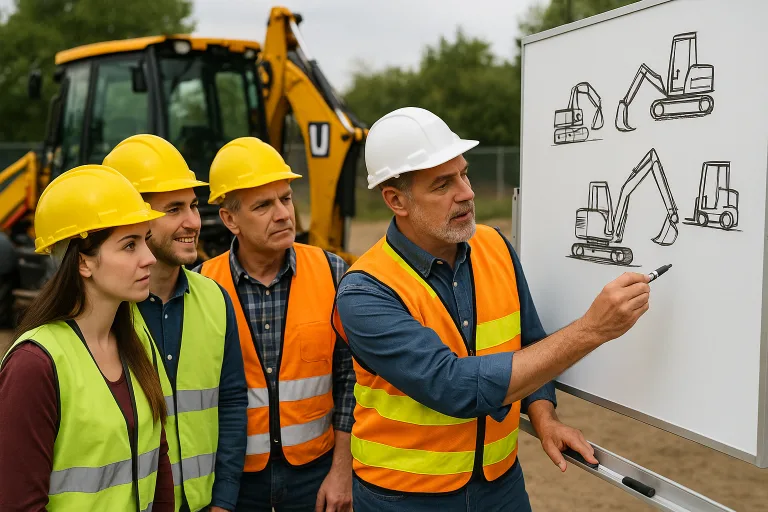
4. Complete theoretical training (safety rules, technical basics, load charts, site procedures) and practical hours on real machines or simulators.
5. Pass internal and external examinations; obtain a certificate/attestation or professional ID (often called *удостоверение* or свидетельство о профессиональном обучении/аттестации).
6. Gain on‑the‑job experience under supervision; keep a logbook of hours and machine types.
7. Maintain currency: attend refresher courses, safety briefings and periodic re‑attestation as required by your employer or current regulations.
Note: exact documentation names and periodic re‑certification requirements may differ by equipment type and current legislation. Always confirm details with the chosen training center, the employer and relevant regulatory bodies.
What training programs should include
— Theory: construction site rules, safe lifting/tipping limits, hydraulics basics, reading technical documentation, environmental and noise regulations.
— Safety modules: occupational safety (*охрана труда*), fire safety, first aid, rescue techniques and PPE use.
— Practical training: start/stop procedures, maneuvering in confined spaces, working on slopes, loads handling, coupling/uncoupling attachments.
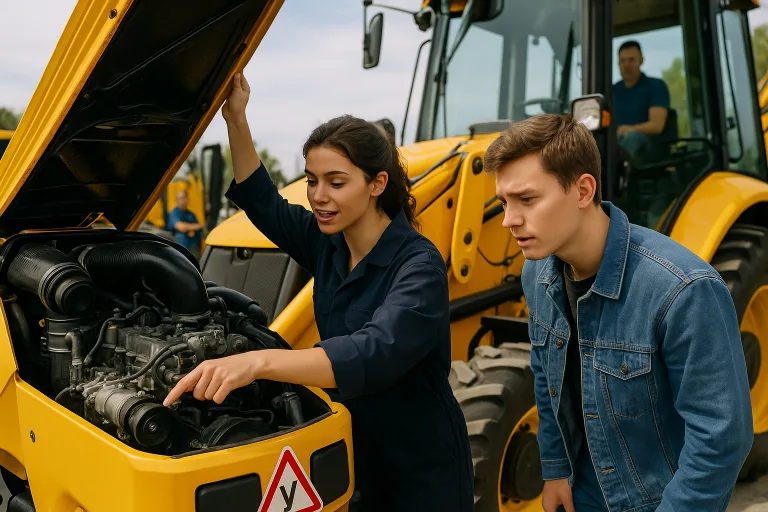
— Basic maintenance: daily checks, greasing, fluid levels, simple troubleshooting.
— Simulator training (if available) to accelerate skill acquisition and reduce machine wear.
— Assessment: written test, practical demonstration, and a final attestation by a commission.
Choosing a training center in Moscow — checklist
— Accredited by relevant authorities and recognized by employers.
— Clear syllabus showing hours for theory and practice.
— Modern fleet and/or professional simulators.
— Experienced instructors with industry background.
— Assistance with attestation/documentation and job placement support.
— Positive reviews and references from local construction companies.
— Transparent pricing, duration and refund/cancellation policy.
Ask the center: Do you provide medical check assistance? What exactly is included in the certificate? How often must I re‑certify?
Safety priorities every operator must master
— Pre‑shift inspections and daily checklists.
— Proper use of PPE (helmets, high‑visibility clothing, hearing protection, seatbelts).
— Understanding machine stability, center of gravity and tipping risk.
— Correct lifting practices and use of slings/attachments.
— Working safely near trenches, utilities and traffic.
— Communication on site (hand signals, radios) and using a spotter when needed.
— Lockout/tagout procedures during maintenance.
— Emergency response: stopping machines, evacuating, first aid.
Medical and fitness considerations
— Operators must meet medical fitness criteria; some centers help organize the required medical commission.
— Fitness includes visual acuity, motor coordination, cardiovascular health and absence of substance dependence.
— Report any chronic conditions to employers; reasonable adjustments may be possible for some tasks.
Career development and specialization
— After initial certification: build hours and diverse machine experience.
— Specialize in high‑value equipment (large excavators, hydraulic breakers, precision grading) for better pay.
— Additional certifications: attachment operation, safety leadership, diesel engine maintenance, GPS/machine control systems.
— Move into higher roles: site supervisor, fleet manager, instructor, service technician or contractor.
— Consider joining large Moscow construction firms, infrastructure projects, municipal services or mining/agriculture contractors for steady work and benefits.
Market outlook and earnings (Moscow context)
— Moscow offers higher demand and wages compared with many regions due to volume of construction and infrastructure spending.
— Earnings vary by machine type, experience, shift structure and employer; operators with multiple qualifications and night/rotational availability typically earn more.
— Upskilling and specialization significantly improve earning potential.