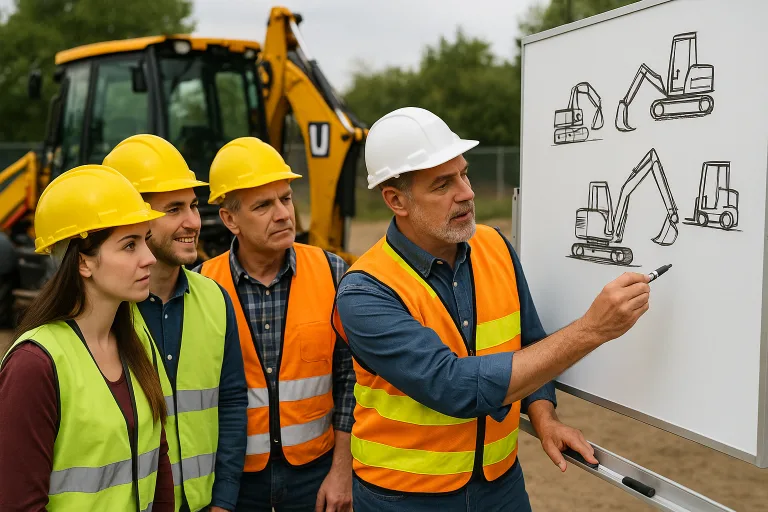
Why professional training matters
Operating tractors, loaders, excavators and bulldozers requires technical skill, legal compliance and constant attention to safety. In Moscow’s fast-moving construction and infrastructure market, licensed and well-trained operators are in demand — and employers expect formal qualifications, medical fitness and demonstrable safe-practice experience.
What licensing and certification generally involve
While exact procedures and names of documents may vary by program and employer, the typical route for a heavy machinery operator in Moscow includes:
— Choosing an accredited training center that issues certificates recognized by employers.
— Passing a pre-admission medical examination (vision, hearing, cardiovascular fitness, musculoskeletal screening and, where appropriate, drug/alcohol testing).
— Completing a course that combines classroom theory and hands-on practice on real equipment.
— Passing practical and theoretical exams administered by the training center or a certifying body.
— Receiving an operator certificate/ID (удостоверение) and, for some special machines, periodic re-certification.
Important prerequisites often include being at least 18 years old, having valid identity documents (passport, SNILS) and meeting workplace medical requirements.
Typical course content and format
Most professional programs cover:
— Machine controls, systems and instrumentation
— Start-up/shutdown procedures and pre-shift inspections
— Safe operation techniques for tractors, loaders, excavators and bulldozers
— Load handling, excavation and grade control basics
— Preventive maintenance and basic troubleshooting
— Site safety, signaling, and working in confined spaces or near utilities
— Environmental and waste handling rules
— Emergency response, first aid basics and accident reporting
Courses combine:
— Theory (classroom or online): 40–120+ academic hours
— Practical training: dozens to hundreds of machine-hours depending on the program and machine type
Duration varies from short intensive programs (2–6 weeks) to longer vocational retraining (several months).
Safety: core principles every operator must master
— Pre-operation checklist and daily inspections — catch issues before they become accidents.
— Proper use of PPE — helmets, hearing protection, high-visibility clothing and safety footwear.
— Situational awareness — blind spots, slopes, overhead/underground utilities.
— Load and stability management — center of gravity, rated loads and safe lifting.
— Communication and signaling with site crews — standard hand signals and radio discipline.
— Lockout/tagout procedures and safe refueling/maintenance practices.
— Reporting and learning from near-misses and incidents.
Choosing the right training center in Moscow
Look for:
— Accreditation or recognized industry endorsements.
— Modern fleet of machines you will actually train on (not just simulators).
— Clear curriculum with specified practice hours and exam formats.
— Transparent costs and schedule; assistance with medical checks and documentation.
— Positive reviews, job placement support or connections to construction companies.
— Trainers with real field experience and a high pass rate for certification exams.
Documents and practical steps to enroll
— Passport and SNILS (or copies).
— Medical certificate or referral for the required medical exam.
— Educational background or previous certificates if applying for advanced courses.
— Enrollment form and payment or installment agreement.
— After training: keep your certificate, exam record and medical clearance ready for employers.
Career path and earning potential in Moscow
— Entry-level operator: basic machines, supervised work; build hours and reliability.
— Skilled operator: advanced techniques, complex machines (large excavators, bulldozers), night shifts and hazardous sites.
— Specialist roles: GPS-grade control operators, site foremen, trainer/instructor, or equipment maintenance technician.
— Supervisory/management: shift supervisor, site manager or operations coordinator.
— Self-employment: owning/contracting equipment to construction firms.
Earnings depend on machine type, experience, shift work, and employer. In Moscow and the Moscow region, experienced operators and those with narrow specializations or hazardous-site experience often command significantly higher pay. Continuous learning, additional certifications and a strong safety record accelerate career growth.
Continuous development and certification renewal
— Re-certification intervals vary; many employers require refreshers or re-tests every few years.
— Take short courses in advanced hydraulics, electronics on modern machines, telematics/GPS systems, and safety leadership.
— Keep a logbook of hours and incidents — it documents experience and helps when applying for higher positions.
— Consider related qualifications: heavy goods vehicle license, crane operator certification, or occupational safety training.
Practical tips to stand out to Moscow employers
— Focus on hands-on hours and documented safe operations.
— Obtain additional skill sets: working with GPS grade control, understanding telematics, or basic diesel mechanics.
— Build references — reliable performance and punctuality matter enormously.
— Be ready for shift work and rotation across Moscow projects.
— Join professional communities and monitor tender and construction news to find opportunities.
Final checklist for prospective trainees
— Verify center accreditation and trainer credentials.
— Complete medical exam before or immediately after enrollment.
— Confirm the number of practical machine-hours included.
— Ask about exam pass rates, sample test formats and job-placement help.
— Keep certificates, medical records and a work log organized and updated.
Licensing and professional training for heavy machinery in Moscow are investments in safety, employability and long-term income. With the right training, disciplined practice and a safety-first mindset, operators can build a reliable and well-paid career in one of Russia’s most active construction markets.