Overview
Operating heavy machinery — tractors, loaders, excavators, bulldozers — is a skilled profession that combines technical knowledge, strict safety practice and official qualification. In Moscow’s active construction and infrastructure market, certified operators are in demand for road works, metro projects, urban redevelopment and industrial sites. This article outlines the typical pathway to qualification, key safety requirements, tips for choosing a training provider in Moscow, and realistic career-development steps.
Who needs certification
— Newcomers who want to become professional operators (тракторист-машинист, машинист экскаватора, бульдозерист, etc.).
— Experienced drivers looking to formalize skills and meet employer requirements.
— Construction companies that must ensure their equipment is operated by certified personnel to comply with occupational safety rules.
In Russia, employers expect operators to hold an official qualification certificate from an accredited training center and to meet medical fitness requirements. Many positions also require periodic refresher training and documented safety briefings.
Typical training and licensing pathway
1. Admission requirements
— Valid identity document (passport).
— Medical clearance confirming fitness for work with heavy equipment (occupational health check / медкомиссия).
— Basic education level (varies by program) — many centers accept secondary education.
2. Training program content
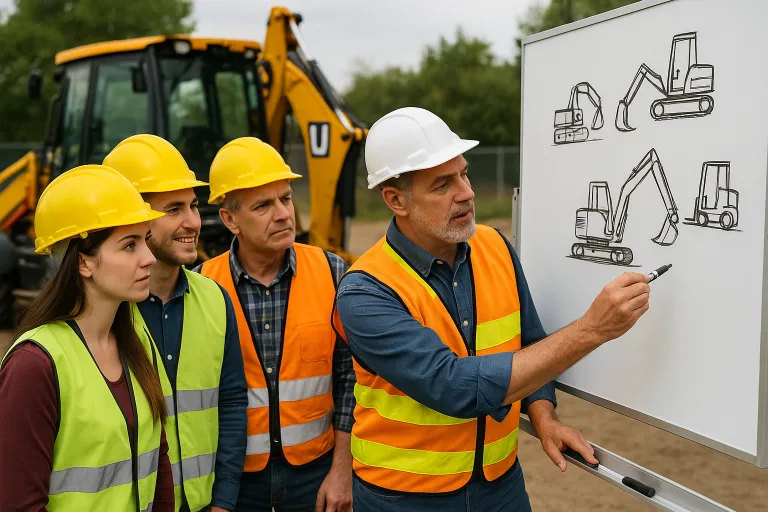
— Theoretical classes: equipment design and operating principles, hydraulics basics, engine systems, safety rules, signaling and communication, legal/administrative requirements.
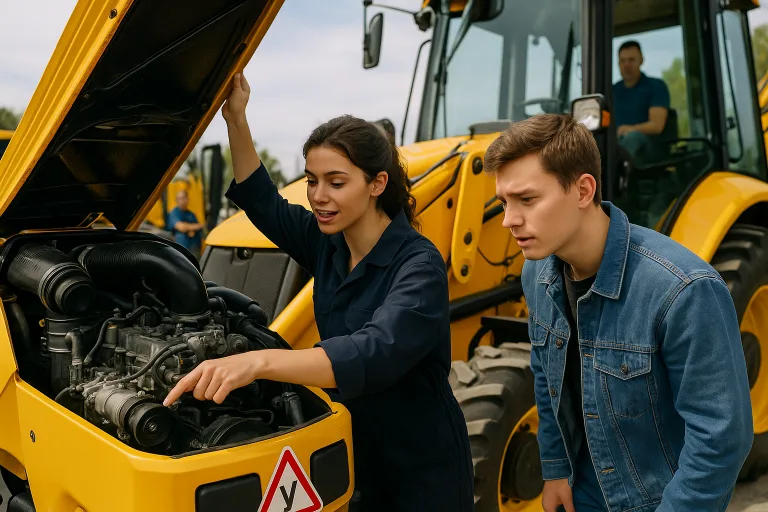
— Practical training: hands-on operation on real machines or simulators (pre-start checks, maneuvering, loading/unloading, earthworks, working on slopes).
— Emergency procedures: fire fighting, evacuation, first aid, handling mechanical failures.
3. Examination and certification
— Final assessment that usually includes a written/theoretical exam and a practical skills test.
— Upon successful completion, candidates receive an operator qualification certificate/attestation (удостоверение or свидетельство) stating the type of machinery and qualification level.
— Employers may require additional on-site induction or tests before allowing independent work.
4. Ongoing requirements
— Periodic refresher courses and safety training as required by employer and occupational safety regulations.
— Regular medical check-ups to confirm continued fitness for duty.
— Retraining/upgrading when moving to different machinery types or higher responsibility levels (e.g., site foreman).
Key safety priorities
— Personal protective equipment (PPE): hard hat, high-visibility clothing, safety boots, hearing and eye protection.
— Pre-shift inspection: check brakes, hydraulics, tracks/tires, lights, warning devices, fluid levels and fire extinguisher.
— Safe operating practices: seatbelt use, travel speeds, working near trenches and slopes, maintaining safe distances from power lines and people.
— Communication and coordination: use of radios, standard hand signals, banksman/signaler presence when visibility is limited.
— Load handling and stability: center of gravity awareness, avoiding overload, secure attachments.
— Emergency preparedness: knowing emergency shutdown procedures, spill containment and first-aid basics.
Career development in Moscow
— Entry-level operator: focus on building hours and competence on one machine type.
— Multi-equipment operator: cross-train on loaders, excavators, bulldozers and tractors to increase employability.
— Senior operator/site lead: responsible for crew coordination, on-site equipment management and mentoring.
— Specialist roles: equipment inspector, maintenance technician, instructor at training centers.
— Management: site supervisor, operations manager, or owner-operator for contractors.
Moscow’s construction and infrastructure projects create continual demand for certified operators. Broadening skills (e.g., GPS-guided grading, telematics, diagnostics) and obtaining higher qualification categories typically results in better pay and more stable contracts.
Choosing a training center in Moscow
— Accreditation and reputation: verify the center is accredited and has a state-recognized examination commission. Ask to see sample certificates and accreditation documents.
— Equipment and training fleet: modern, well-maintained machines and/or simulators provide better practical experience.
— Instructor qualifications and experience: seasoned instructors with field experience are invaluable.
— Class size and hands-on time: smaller groups mean more instructor attention and more machine hours.
— Job placement assistance: some centers have partnerships with construction companies and can help with internships or vacancies.
— Reviews and alumni feedback: check local forums, professional groups and ask former students about outcomes.
Documents and practical preparation
— Bring your passport and any required ID.
— Complete the medical commission and bring the certificate of fitness.
— Wear or be ready to use required PPE for practical training.
— Prepare a short CV detailing prior related experience (if any) — this may shorten training for experienced candidates.
Salary expectations and demand (approximate)
Wages vary by equipment type, employer, and experience. In Moscow, experienced operators on specialized machines and night shifts typically earn more than entry-level operators. Expect incremental pay increases as you gain hours, certifications and specialized skills. (For exact salary benchmarks, consult local job listings and recruitment agencies.)
Practical tips for success
— Log machine hours and keep copies of certificates and safety briefings.
— Cross-train on several types of equipment to widen job opportunities.
— Stay current with safety procedures and new technology (telemetry, remote diagnostics).
— Network with contractors and companies working on major Moscow projects—many hires come through contacts.
— Consider short courses in maintenance, hydraulics, or management to advance faster.
Useful resources
— Accredited vocational training