Introduction
Operating heavy machinery — tractors, loaders, excavators and bulldozers — is a skilled, well-paid profession with strong demand in Moscow’s construction, municipal and industrial sectors. Proper training, licensing and safety awareness are essential for legal compliance, personal safety and career advancement. This guide explains how to get trained and certified in Moscow, what safety and medical requirements to expect, and how to build a long-term career in special equipment operation.
Who needs formal training and why
— Employers and regulators require certified operators to minimize accidents, damage and downtime.
— Formal training gives practical skills, legal documentation (operator certificate/удостоверение) and proof of competence for hiring and promotion.
— Training reduces insurance premiums and increases employability with major contractors and rental companies.
Typical training path in Moscow
1. Choose an accredited training center
— Verify accreditation by relevant federal or regional authorities and check reviews, equipment availability and instructor experience.
— Look for centers offering both classroom theory and hands-on practice on the actual types of machines you want to operate.
2. Pass a medical fitness check
— A medical certificate confirming fitness to operate heavy equipment is usually required before practical training. Check the training center’s requirements for the exact form and list of tests.
3. Complete theoretical training
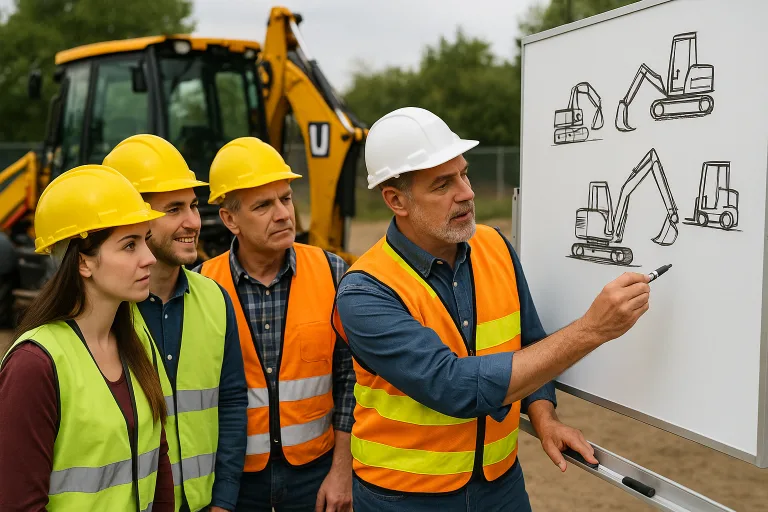
— Topics include machine components, operating principles, safety regulations, signaling, site rules, load management and emergency procedures.
4. Complete practical training
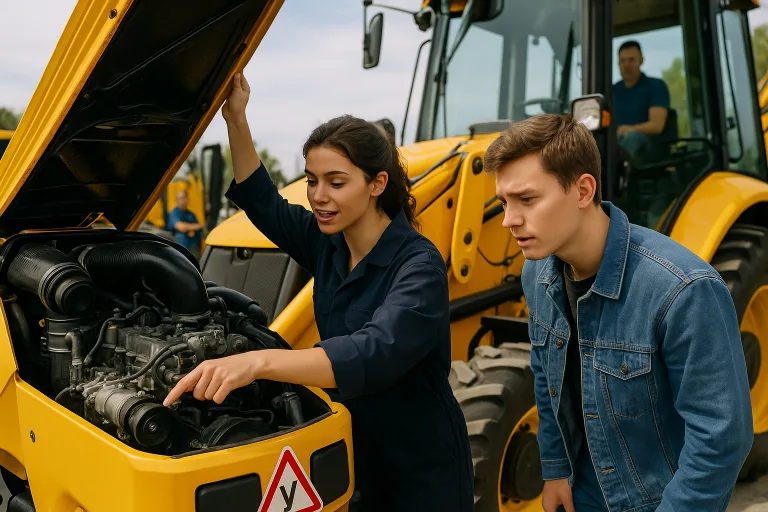
— Supervised hours on real machines (tractor, loader, excavator, bulldozer) with progressive exercises: start/stop, maneuvering, digging/grading/lifting, attachments, and site tasks.
5. Pass exams
— Final assessment typically includes a written/theoretical test and a practical skills check. Successful candidates receive an official certificate or operator’s licence/удостоверение.
6. Start working and maintain qualifications
— Keep records of work experience; attend periodic refresher training or retraining as required by your employer or regulators.
Documents and requirements (typical)
— Passport or national ID
— Medical certificate of fitness for heavy machinery operation (obtain at accredited medical facility)
— Proof of completed training (issued by the training center)
— Additional employer-mandated documents (safety briefings, site-specific inductions)
Note: Exact documents and validity periods vary by employer and regulatory changes — always confirm current requirements with your chosen training center and employer.
Safety fundamentals every operator must master
— Pre-shift machine inspection (fluids, brakes, tracks/wheels, attachments, safety devices)
— Personal protective equipment (PPE): helmet, high-visibility clothing, safety boots, hearing and eye protection
— Load-handling and stability: understand load limits, center of gravity and safe lifting techniques
— Site communication: hand signals, radios, agreed traffic routes and exclusion zones
— Working near utilities and underground services: confirm markings and safe digging procedures
— Emergency procedures: shutdown, fire response, evacuation and first aid
— Environmental best practices: spill prevention, dust suppression, proper waste handling
Career development and specializations
— Horizontal steps:
— Entry-level operator → Experienced operator → Senior operator/shift lead → Foreman/site supervisor
— Specializations to boost employability and pay:
— Certification for additional equipment (cranes, asphalt pavers, road rollers)
— Training in diagnostics and basic maintenance
— Higher responsibility roles: trainer/instructor, safety officer, equipment fleet manager
— Soft skills that help:
— Reliability, teamwork, clear communication, basic technical reading and record-keeping
— Consider joining professional communities or trade unions and use Moscow job platforms, contractor contacts and equipment rental companies to find steady work.
What to look for in a training center in Moscow
— Modern fleet of machines similar to those used on jobsites
— Experienced instructors with real field experience
— Clear program outline: theory hours, practical hours, exam format
— Transparent pricing and realistic timelines
— Assistance with certification paperwork and post-course job placement or recommendations
— Up-to-date safety and regulatory compliance information
Costs and duration (estimates)
— Duration: from a few weeks (intensive courses) to several months (part-time), depending on prior experience and course intensity.
— Costs: vary widely by course length, type of machine and center — expect from modest fees up to professional programs costing more. Ask centers for full breakdowns (tuition, exam fees, materials).
Practical tips for success
— Get a medical check-up early — it’s often required before practical training.
— Practice basic mechanical and maintenance checks; operators who can do simple diagnostics are valued.
— Build a portfolio: keep copies of certificates, logbooks of hours and recommendations from employers.
— Network on construction sites and in equipment rental yards — many hires are referral-based.
— Keep learning: periodic refresher courses, safety updates, and new equipment certifications will keep you competitive.
Final checklist before you start
— [ ] Choose an accredited Moscow training center with relevant machines
— [ ] Obtain required medical fitness certificate
— [ ] Confirm course content, hours, practical training and exam procedure
— [ ] Verify what certificate/удостоверение you will receive and its acceptance by employers
— [ ] Understand costs, schedule and any post-course support or job placement
Conclusion
A career operating tractors, loaders, excavators and bulldozers in Moscow